
Do You Actually Need a Company?
Some people incorporate the moment they earn any foreign income at all. Others avoid it long after they've genuinely outgrown personal invoicing. This companion guide walks through what a Panama S.A. actually is, and why banking is where a lot of otherwise well-structured plans quietly come apart. Free, about 10 minutes.
A lot of people living and working remotely out of Barranquilla hear the phrase "offshore company" and assume it is either something shady or something every serious freelancer needs. Neither is quite right. A foreign invoicing entity is a legitimate, ordinary business tool for a specific set of situations, and an unnecessary complication and cost for a lot of other people who would honestly be fine invoicing as an individual with good bookkeeping. This guide is about telling the two apart before you spend money setting one up.
Who actually needs an invoicing entity
A separate company (as opposed to invoicing clients directly as an individual) tends to make genuine sense once several of these are true at the same time:
- You have multiple clients or income streams and want one clean, professional entity billing all of them, rather than mixing personal and business finances
- A client, particularly a larger corporate client, requires invoicing from a registered business entity rather than an individual, which comes up more often than people expect once contract sizes grow
- You want a banking relationship separate from your personal accounts, useful once revenue and the number of transactions both grow
- You are planning to bring on contractors or partners under the same entity rather than everyone invoicing separately
- Your income and residency situation genuinely benefits from structuring where the entity is based, which is a question for licensed advice, not a general rule
Who almost certainly does not
If you have one or two long-term clients, straightforward monthly invoicing, and no near-term plan to hire anyone or bring on a business partner, a foreign entity is very often unnecessary complexity: an annual filing obligation, a registered agent fee, banking maintenance, and a second set of books to keep straight, for a benefit that may not exist in your case. Plenty of remote contractors are genuinely better off invoicing as an individual with a good accountant, in whichever country actually taxes them, and revisiting the question later if their business grows into it.
What a Panama S.A. actually is
For people who do have a genuine case for an entity, Panama's Sociedad Anónima (S.A.) is one of the more established corporate vehicles in the region: a standard corporate structure with shareholders, directors, and officers, formed under Panamanian corporate law, that can hold a bank account, sign contracts, and invoice clients in its own name. Combined with Panama's territorial tax system, where the company generally is not taxed on income earned from clients or activity outside Panama, it is a common choice for contractors and small operators who genuinely need an entity and want it in a jurisdiction with a US-dollarized economy and an established banking sector.
None of that makes it automatic or free. Forming and running an S.A. properly means registered agent fees, annual compliance filings, and ongoing bookkeeping, on top of whatever your home-country or Colombian tax obligations already are. It is a real business decision with real ongoing cost, not a one-time trick.
Full disclosure, not secrecy
This is worth being blunt about. A properly formed and properly reported foreign company is a completely legitimate business tool. What is not legitimate, and what this guide is explicitly not describing, is using an entity to hide beneficial ownership, avoid required disclosures, or dodge filing obligations you actually owe in your home country or country of tax residence. A compliant structure means beneficial ownership is registered where required, filings happen on time in every relevant jurisdiction, and your accountant in each country knows the entity exists. If a structure only works because nobody finds out about it, it is not a structure, it is a liability waiting to surface.
Common mistakes
- Forming a foreign company before confirming you actually need one, and paying ongoing fees for a structure that adds no real benefit
- Assuming a foreign entity automatically eliminates personal tax obligations in your home country or country of tax residence, it generally does not
- Skipping proper beneficial-ownership registration because "it's just a small company"
- Not coordinating the entity's accountant with your personal accountant, so nobody has the full picture
- Choosing a jurisdiction based on a forum post rather than a licensed opinion matched to your specific facts
Getting this looked at properly
Setting up and maintaining a Panama S.A. properly, banking it, and keeping it compliant year over year is coordinated work: corporate structuring, banking, residency where relevant, and ongoing tax filing, ideally delivered as one engagement through licensed local partners rather than you separately managing a registered agent, a bank, and an accountant on your own. Published pricing for a contractor or small operator who needs a Panama S.A. alongside personal residency typically starts a few thousand dollars USD plus a modest monthly fee; a two-layer entity structure with a Private Interest Foundation for more complex holdings runs higher. Figures are typically in USD, exclusive of government fees.
If you want an honest read on whether your situation actually calls for a company at all, tell Catalina what's going on, in confidence, and we'll point you toward the right kind of help. A good first conversation often ends with "you don't actually need this yet," and that answer is worth as much as the one that says you do.
FAQ
Do I need a Panama company just to work remotely from Colombia?
Almost certainly not. Most remote contractors are fine invoicing as an individual. An entity becomes worth considering once you have multiple clients, a client that requires a registered business, or a genuine structuring need, confirmed with licensed advice.
Does forming a Panama company mean I stop paying tax at home?
Generally no. Your home-country and Colombian tax residency obligations do not disappear because a company exists elsewhere. See Tax Residency in Colombia: The 183-Day Rule for how Colombian residency itself is triggered.
Is this the same thing as hiding money offshore?
No, and treating it that way is the mistake to avoid. A compliant structure means registered beneficial ownership and on-time filings in every jurisdiction involved. If secrecy is the point, it is not a legitimate structure.
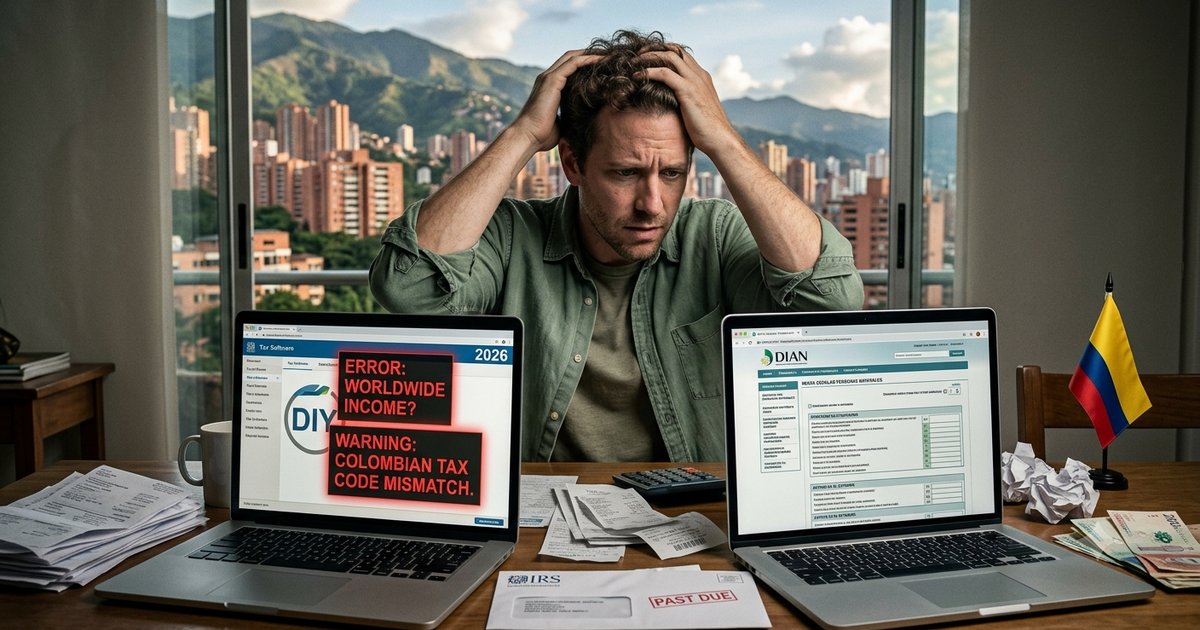
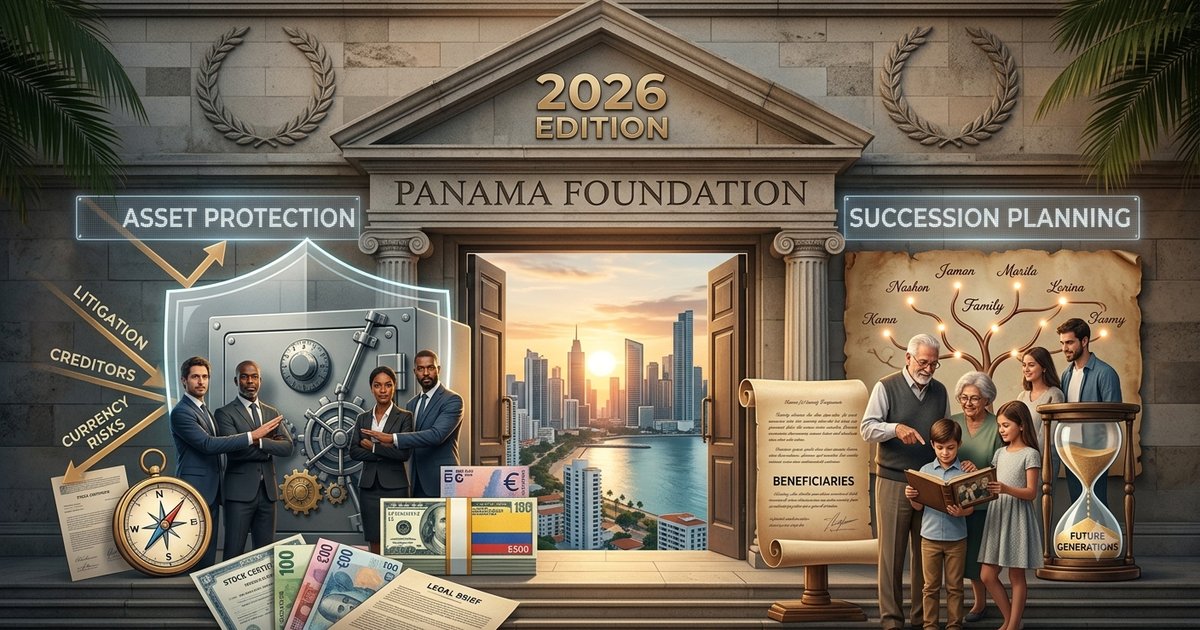
Related reading on this topic: The Worldwide Income Trap: Why DIY Tax Answers Fail Once You Live in Colombia, Building a Real Plan B: Panama Residency for People Living in Colombia, Asset Protection and Succession Planning with a Panama Foundation.
Still have questions?¿Todavía tienes preguntas?
Catalina is our concierge. Ask her about visas, neighborhoods, healthcare, prices, anything Barranquilla. She answers in chat or WhatsApp, English or Spanish, free.Catalina es nuestra concierge. Pregúntale sobre visas, barrios, salud, precios, cualquier cosa de Barranquilla. Responde por chat o WhatsApp, en inglés o español, gratis.
Chat with Catalina ›Habla con Catalina ›